How the Kharidar exam is marked: a complete guide
9 min read
What each paper is worth, how negative marking works, what the pass mark really means and how the merit list is made, with worked examples.

Sample article. It doubles as the style guide for articles: every element an editor can add appears somewhere below. The marks and question counts are an illustration; check the syllabus for your post on psc.gov.np before you plan around them.
Kharidar (खरिदार) is the non-gazetted second class post in the civil service, and for many candidates it is the first Lok Sewa exam they sit. Most of the worry about it is not about the syllabus but about the marking: how much a wrong answer costs, what the pass mark really means, and how the advertised seats turn into a merit list. This guide walks through all of it, with numbers.
If you only have a minute: answer every question you can narrow down to two options, aim well above 40 per cent in each paper, and review every mock test you sit rather than just counting the score.
The exam at a glance
The PSC (लोक सेवा आयोग) runs the exam in stages. You only move on to the next stage if you pass the one before it, so a weak first paper ends the attempt however strong the rest would have been.
| Stage | Paper | Format | Full marks | Pass marks |
|---|---|---|---|---|
| First | Paper I: General awareness and aptitude (सामान्य ज्ञान तथा सामान्य मानसिक क्षमता) | Objective, 50 questions × 2 marks | 100 | 40 |
| Second | Paper II: Office management and related law | Subjective, written answers | 100 | 40 |
| Final | Interview (अन्तर्वार्ता) | Oral, in front of a panel | 20 | – |
| Total | 220 |
Paper I: objective questions
Each question has four options and one correct answer. Questions range from current affairs to arithmetic: one asks what H2O is called in Nepali, the next asks for 103 ÷ 8. The paper rewards breadth, and the order you answer in is up to you: easy ones first
is still the best advice.
What a question looks like
प्रश्न: नेपालको संविधान कहिले जारी भएको हो? (क) २०७२ असोज ३ (ख) २०६३ माघ १ (ग) २०४७ कात्तिक २३ (घ) २०६५ जेठ १५
The answer is (क): the Constitution of Nepal was promulgated on . Notice how the wrong options are real dates from the same history; that is typical.
How negative marking works
For every wrong answer, 20 per cent of that question’s marks1 is taken off your score. A question you leave blank costs nothing. Answering two options on one question counts as wrong.
In symbols, with c correct and w wrong answers on a 2-mark paper:
score = (c × 2) − (w × 0.4)Here is the same calculation for a candidate who answered 46 of the 50 questions:
Correct   38 × 2.0   =  76.0
Wrong      8 × 0.4   =  −3.2
Blank      4 × 0     =   0.0
-----------------------------
Paper I score        =  72.8 / 100
The answer sheet scanner prints the result as Score: 72.80. Marks are shown to two decimal places; the merit list uses the unrounded total.
A wrong answer costs a fifth of what a right one earns. Rule out what you can, then answer.
Loksewa Gyan exam desk
When to guess
Because the penalty is small, guessing pays more often than candidates think2:
- Two options ruled out: answer. Half the time you gain 2 marks, half the time you lose 0.4, so each such guess is worth +0.8 on average.
- One option ruled out: still answer, at +0.4 on average.
- Unless you are already safely above the pass mark and the question is a pure coin toss for you.
- Mark it in the question paper so you can come back if time allows.
- Nothing ruled out: a blind guess is still slightly positive (+0.2), but it adds risk without adding knowledge.
Always leave these blankLeave these for last.
Pass marks and the merit list
A common misreading, corrected: you need 40 per cent across both papers 40 per cent in each paper. Passing is only the entry ticket, though. Seats go to candidates in order of their merit list position: the ranking by total marks of everyone who passed every stage. The rules come from the Lok Sewa Aayog Act, 2066 and the regulations under it.
Seats are split before ranking, so it helps to know the words on the notice:
- Open competition (खुला प्रतियोगिता)
- Seats any eligible candidate competes for. Everyone is ranked on one list.
- Inclusive groups (समावेशी)
- A share of seats is set aside for women, Adivasi Janajati, Madhesi, Dalit, persons with disabilities and candidates from backward regions. You can apply under open competition and one or more inclusive groups at the same time.
- Internal competition (आन्तरिक प्रतियोगिता)
- Seats for civil servants who already work in the service and meet the years-of-service rule.
- Alternate candidate (वैकल्पिक उम्मेदवार)
- The next person on the merit list, recommended if a selected candidate does not take up the post.
Each inclusive group has its own ranking3, so the last recommended score can differ a lot between groups in the same advertisement.
Three candidates, one score sheet
The table below follows three made-up candidates through every stage. On a phone it scrolls sideways.
| Roll no. | Correct | Wrong | Blank | Paper I | Paper II | Interview | Total | Result (नतिजा) |
|---|---|---|---|---|---|---|---|---|
| 1021 | 38 | 8 | 4 | 72.8 | 58.0 | 14.0 | 144.8 | सिफारिस (recommended) |
| 1047 | 30 | 18 | 2 | 52.8 | 61.0 | 15.0 | 128.8 | वैकल्पिक (alternate) |
| 1102 | 22 | 20 | 8 | 36.0 | – | – | 36.0 | अनुत्तीर्ण (did not pass Paper I) |
Show the full calculation for roll 1047
Paper I: 30 × 2 = 60, minus 18 × 0.4 = 7.2, gives 52.8. Add Paper II (61) and the interview (15): 52.8 + 61 + 15 = 128.8.
Does the interview count if I fail Paper II?
No. Only candidates who pass the written stage are called for the interview, and the interview marks are added to the written total for the final ranking.
Practising under exam conditions
Knowing the rules is half of it; the other half is sitting enough timed papers that the rules stop costing you marks. A mock test with the same negative marking shows you, in numbers, whether your guessing is helping.
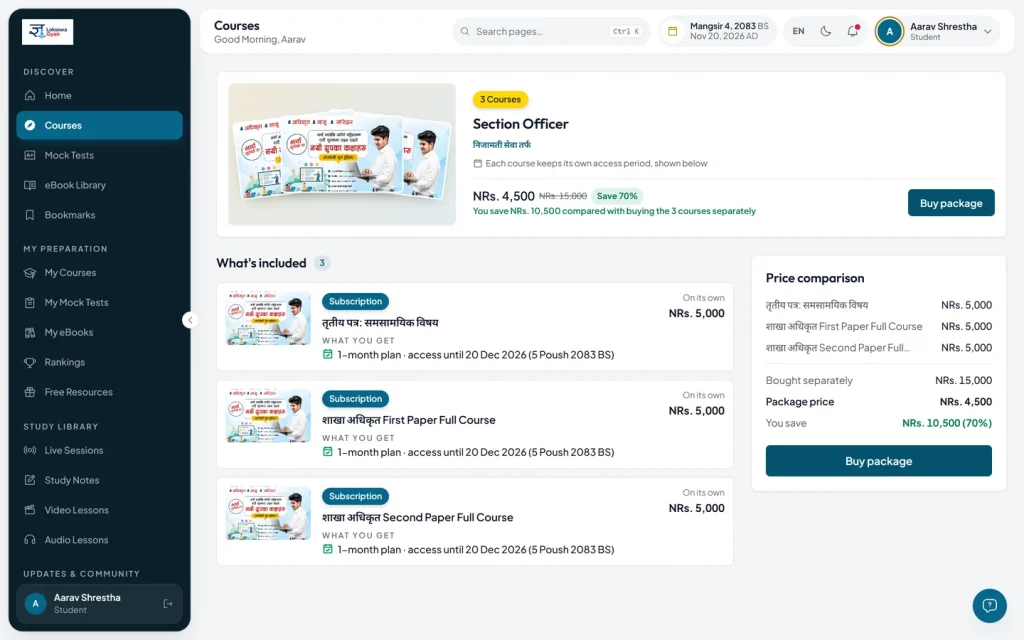

Sit the whole paper in one go. Fifty questions in the real time limit, phone face down, no pausing. Half a paper tells you about your knowledge; a whole one also tells you about your stamina and your pace in the last fifteen minutes, which is where most careless wrong answers happen.
Then review it the same day. Sort every wrong answer into one of three piles: did not know, misread, or guessed badly. Only the first pile needs more study; the other two need a change in how you answer. On a laptop, Ctrl + F in the syllabus PDF finds the topic of each missed question in seconds.
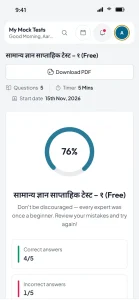
The result screen splits your answers into correct, incorrect and skipped, which is exactly the breakdown you need for the negative-marking maths above. Track two numbers from test to test: your score after penalties, and how many marks the penalties took. If the second number is above 5, you are guessing too freely; if you skip more than 8 questions, too timidly.
नियमित अभ्यासले मात्र परीक्षाको समय व्यवस्थापन सिकाउँछ। हरेक हप्ता कम्तीमा एउटा पूरा मोडेल टेस्ट दिनुहोस् र गल्ती भएका प्रश्नहरू छुट्टै कापीमा टिप्नुहोस्।
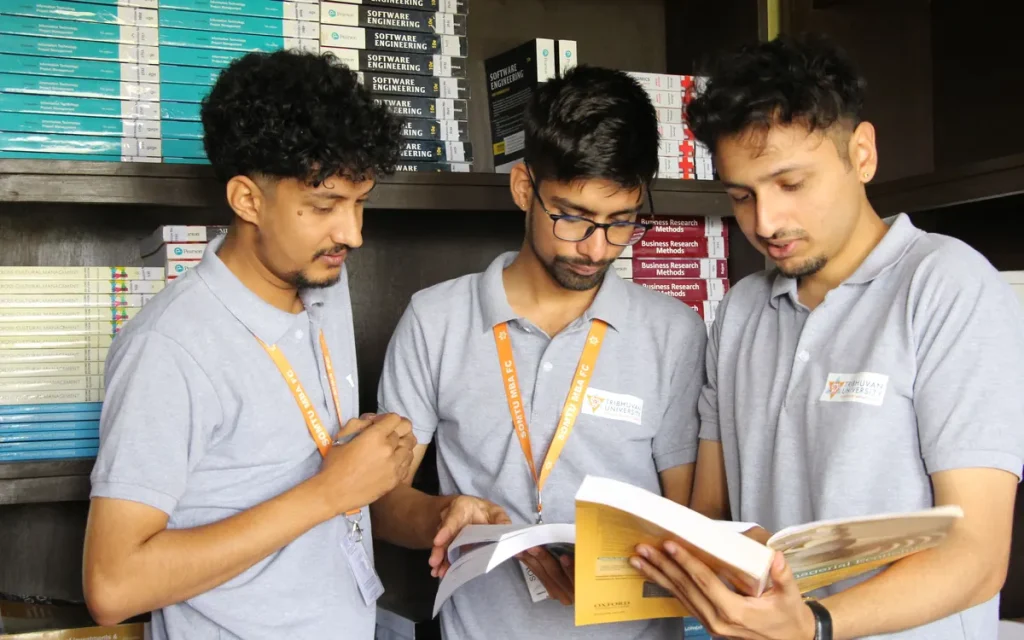

Studying around a job?
Most Kharidar candidates do. Two timed papers a week, one on Saturday morning and one on a weekday evening, beat seven rushed half-papers.


A mock test checklist
Before
- Set a timer for the real duration.
- Use pen and paper for rough work.
- Decide your guessing rule in advance.
After
- Note the score after penalties.
- Sort the wrong answers into three piles.
- Re-test the misses a week later.

Paper II: writing answers that score
Paper II has no negative marking, but it has its own trap: examiners mark what is on the page, not what you know. A clear structure earns marks that a longer, unstructured answer does not.
Structure of a 10-mark answer
Introduction
Two or three lines that answer the question directly, before any detail.
Definitions first
If the question names a term, such as सुशासन (good governance), define it in one sentence and, where you can, cite the act that defines it.
Keep it to two lines
A definition that runs to a paragraph is no longer a definition. Save the detail for the body.
- Body: four to six points, each one a short heading of your own followed by two or three sentences, with an example from Nepal wherever the question allows it, because examiners consistently reward answers that connect the law or the principle to how an office actually works.
- Conclusion: one or two sentences that return to the question, not a summary of everything you wrote, and never a new point you did not have time to develop.
- Presentation: underline the key terms, leave a line between points, and write the question number in the margin so the examiner never has to search for it.
Watch the clock. In Paper II, an unanswered 10-mark question costs more than any amount of polish on the others. If time is short, write the structure as bullet points.
Examiners mark what is on the page, not what you know.
Loksewa Gyan exam desk
Watch, read, download
The aptitude half of Paper I is the part most candidates under-prepare. Our orientation class on YouTube covers the question types and the shortcuts for each:
The PSC publishes every exam schedule as a PDF. This one is the revised schedule for the technical Kharidar papers:

तयारी आजै सुरु गरौँ। Start preparing today.
And for the night before the exam, a short verse:
बिहानको उज्यालोसँगै किताब खोल्छु,
हरेक प्रश्नमा आफ्नै बाटो खोज्छु।
आज थोरै, भोलि अलि बढी,
मेहनतले नै खोल्छ सफलताको ढोका।
Notes
- Per question, not per paper: a 2-mark question loses 0.4 marks when the answer is wrong. ↩︎
- Expected value of one answer = (chance of being right × marks) − (chance of being wrong × penalty). ↩︎
- The notice for each advertisement lists how many seats are open and how many are reserved for each inclusive group. ↩︎